

Inside Look
[ OUR SPONSOR ]
Proudly Sponsored By
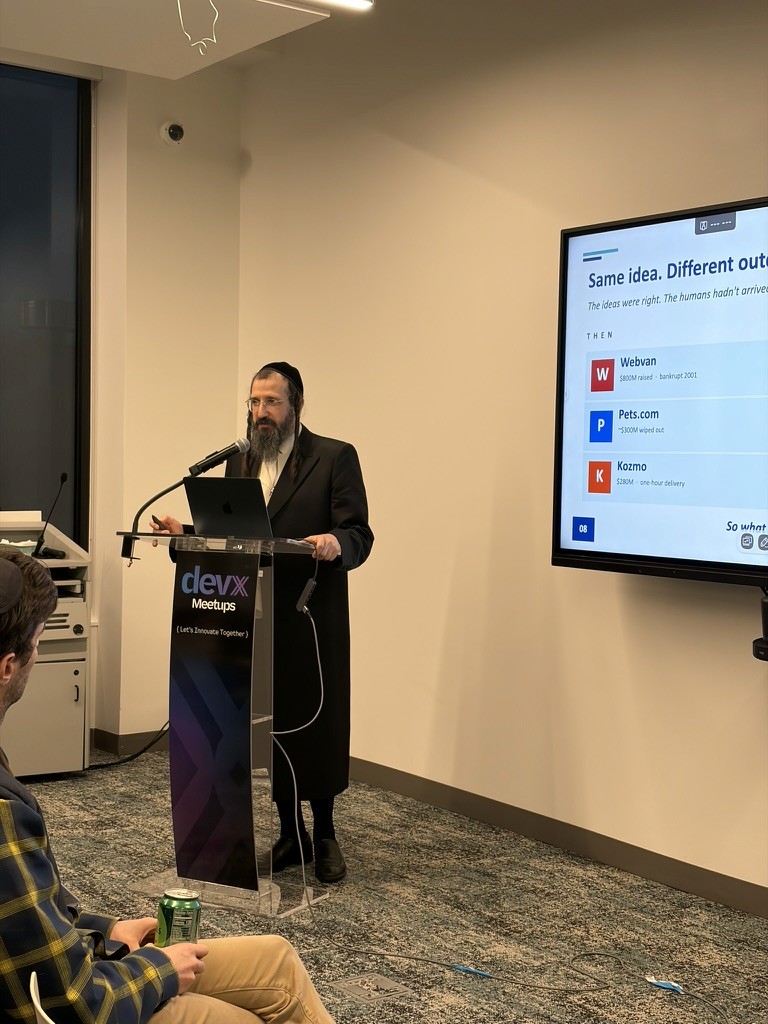
Video Transcript
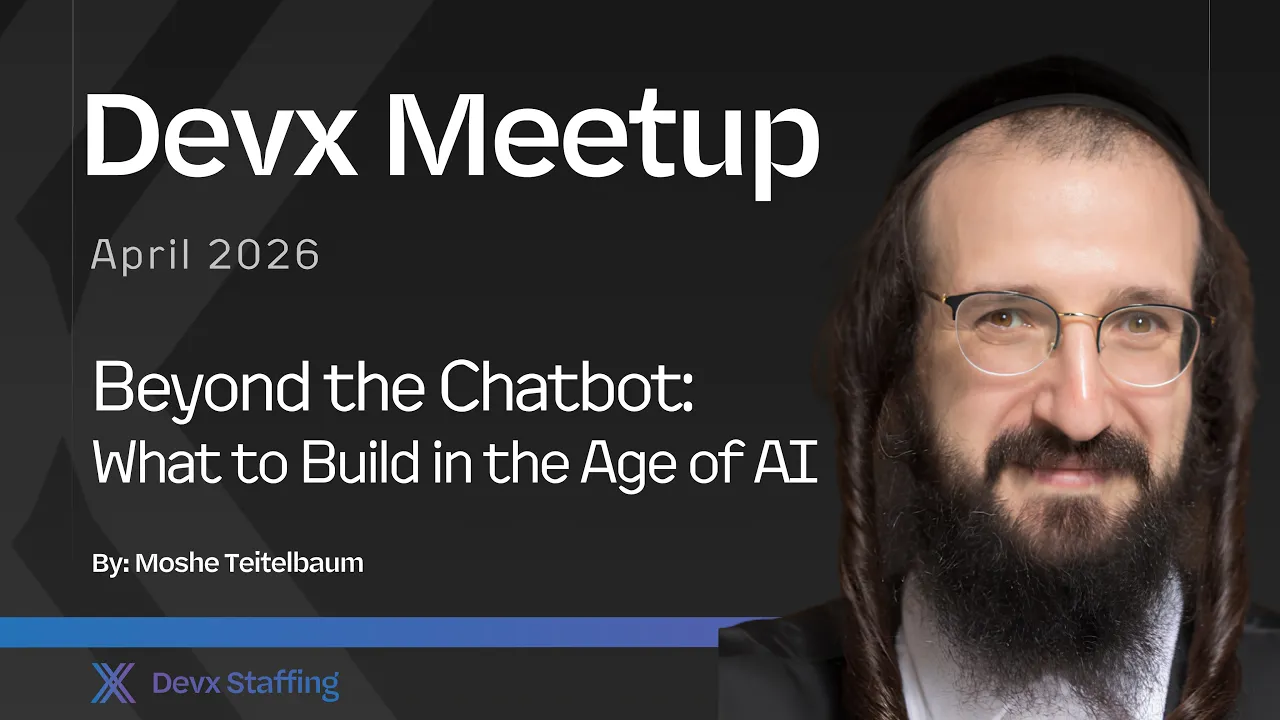
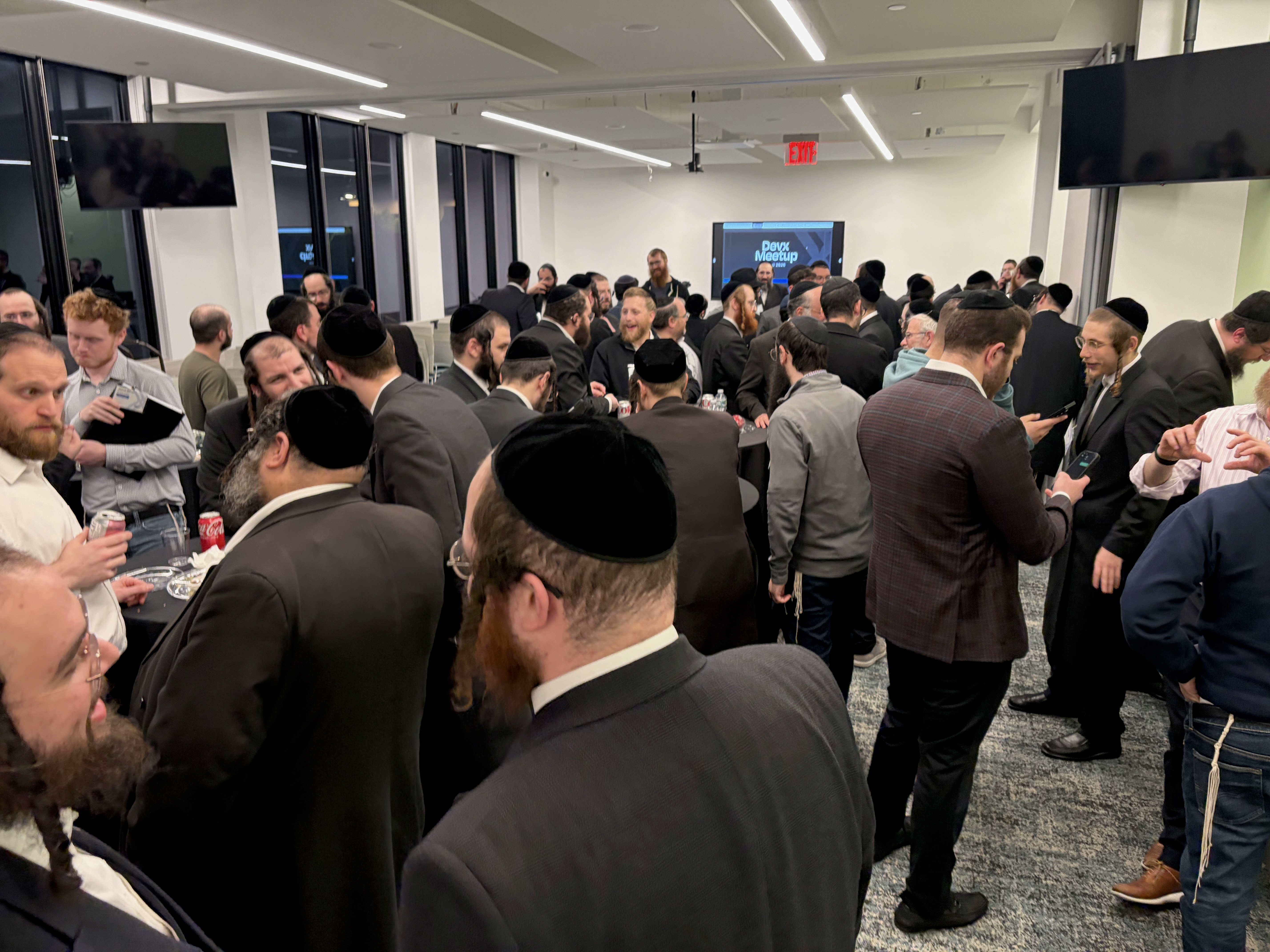
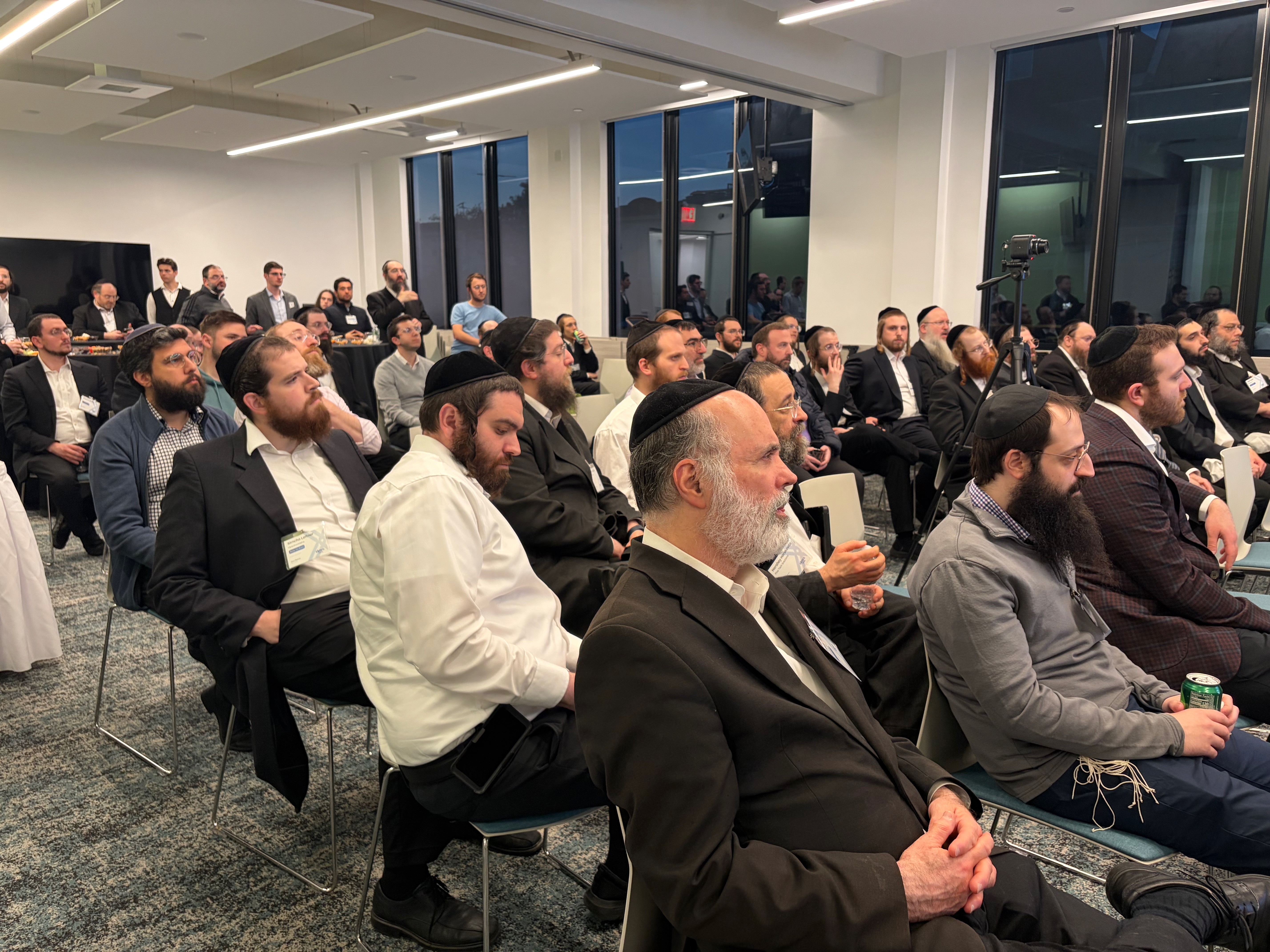
Good evening everyone. I wanna invite everyone to take a seat for the presentation of the night. We live in a time of unprecedented change, and that's really the reason why we're here tonight. It's clear that there is going to be winners and losers. Because of ai and the goal tonight is to prepare us. So we are from the winners. Personally, I have been a technical recruiter, for the past couple of years since starting DevX Staffing. We recruit and technology software developers tech leads and everything in between. And I've never had that many positions open at once. It appears that as the models become stronger, companies are hiring even more. So if you know someone that is hiring or you're looking for hire, or the same as if you're looking for a job or know someone that is looking for a job, send them my way. I would love to help. I do wanna thank the Met Council, the host of the evening for providing the venue. It's the second time they do it, and the accommodations are beautiful. So everyone please a round of applause. I don't think Moshe TBA needs an introduction. He's the founder of Cherry net and has been an integral part of the firm tech community for a long time, and I'm so excited that Moia accepted my request to present tonight. I dunno if you know, but Mosha is really the first that started all of this in 2016 with a y Yog group. Anyone here that remembers or was there not a lot? I guess AI changed a lot of things, but, um, Mosha, Mike is yours. So at Cherry, we are processing now close to a billion dollars a month in accounts payable, uh, vendor payment. And for the last 18 months we are trying to figure out what can we use ai. To make our system better, to make it more, um, usable. And it's a question that we keep on asking ourselves. We came up with some ideas and we'll try to share them tonight. So we'll start with a question question is two companies the same industry and finance? One is building an uh, uh, uh, a CFO assistant that does everything. Forecasting, budgeting, cash flow, everything that a finance team does with ai or another company that that is doing one feature, a basic feature, whatever bank transaction comes into your bank, you get. Uh, an exact message. What it is, what it does, and what, what's it related to in your head? You don't have to, you don't have to commit out loud. What do you think? Which company in 18 months later made more, made more revenue? So, although most of you probably answered in your head, company A, they're doing everything and they're eliminating employees, and that's the classic case study for every. SaaS company and B2B business, uh, application for the last many years. The reality is, um, in the last, it's not just a theoretical question. The last couple of years we have seen that with ai, um, in a similar fashion. So it started with cursor. Cursor went very narrow. They released an IDE. Um, uh, IDE. That's, uh, ai dr. That is ai. And they were announced as being the fastest B2B growing company. Uh, open AI and tropic both actually have, uh, adopted the same idea. Nobody's telling you write, um, code with plot code, with, uh. Chad, GPT. They built Codex and they built, um, CLO code just to show you numbers on in terms of revenue. CLO code by the end of 2024, had a billion. Claude and traffic had a billion dollars in revenue. End of 2024, end of 2025, they were already at 25 billion in the last, I'm sorry, end of 25. They were at 9 billion. The last four months they went up to 30 billion. And mostly from cloth code and APIs. So the accounting shenanigans that's, you can call that, that we'll figure out later. But on their run rate, they're probably gonna be, um, uh, surpassing open AI by the end of the year. Um, everybody, the, the entire market understands that narrow workflows beats. Broad capabilities in every step. And why is it the simple version? There's this answer that we like to answer ourselves. Everybody wants to have the thing that answers his need. The developer wants the library that fixes what he needs. Right now, the buyer and the finance team wants to fix that, their problem, and everybody thinks it's a simple. This is the straight answer. I may be wrong and I'm, and you may disagree with me, but I believe the answer is much more complex than that, to a point that I believe. Um, net is never a strategy. It's a consequences of how human behave, and the human behavior is much more complex. It involves trust habits. Friction tolerance, integrity, and an idea that I'm gonna introduce, which is the lowest denominator user setting the pace for everyone. It's, uh, and I will try to unpack it tonight and bear with me until the end how we, how I got to where I got it. So back to cherry. 18 months ago, we decided we're gonna what? What are we doing? AI is coming up, what are we building? And we decide to build an autonomous ap and we have built a full system. Okay? We have learned that not to build the entire system. So we built bots with some fake stuff, running some stuff, and try to see how much the user engage and where they get stuck. Where's the user until how far we can schlep the user. We tried one way, we tried the other way. Um, consistently not once. Eight projects all failed miserably. We couldn't get the user to bite on anything. AI and it, it was tough. So we went back and we tried to do, look at patterns, like tried to look at what worked in the past, and that's when I cr we kind of create a research project. And it started out with the research going back to the.com bust. What worked, what didn't work? $5 trillion was lost in the wood.com bubble and they weren't wrong. Mostly the ideas were definitely not wrong. They were wrong about the human Webvan raised somewhere around $800 million. They crashed in 2001. Instacart is now worth over $10 billion, I think. Um, pets.com, the same thing now worth, uh, Chewy's worth over $30 billion. So I speak. And DoorDash with the co, um, Cosmo, this is DoorDash, is now $60 billion. Cosmo, um, I think lost a billion dollars market cap, $280 million invested money, totally lost. Same ideas, same, same ideas, same vision, just a different outcome. So what did they miss? There was, there's a talk from Jeff Bezos saying that most people are asking what's going to change in the next 10 years. Very few are asking, what's not going to change in the next 10 years? And the second question creates for better outcomes, web van pets.com, Cosmo, they all bet on what would change. How humans will behave different. The survivors, Amazon, Google, eBay, they all bet on something that the humans have not changed. People always want answers. People always want the cheaper price and people want, always want to have a place where they can sell stuff of. So after digging a lot. Nights conversations with my partner, za Rosenthal. I don't know if people know him. We can, he can actually introduced me to a new idea and he called it the human element. The human element is the gap that is between what the technology can do and the human is ready to adopt and most companies are not. Calculating for that. We're trying to use the best tech and the best stuff to push the human to expect that the human will get there. Everybody is building for a human who fully trusts ai. Everybody, a human that allows AI to move money. A human that wants the machine to do everything. Essentially, if you're building for that. That human may come, may, may actually show up eventually, but it's definitely not gonna be this year and probably not in the next two years. It is actually the most expensive thing to ignore when building a new product. We came up with, actually, my partner introduced me to a question, when was the last man Tobo, um, in New York State in 2024 to be exact. When was the first time, uh, EPASS was introduced? Anybody knows? Hmm. 1992. Oh. Which means 32 years from what was first introduced until it was completely adopted, that it wasn't even adopted. It was enforced, adopted the state decided to remove all man told with and deal with it. Cell phones. Cell phones was launched in the nineties by now. We have only reached this year 90% of adoption, which is the most val, valuable consumer product ever released. It's still only at 90% of adoption. Adoption will always follow the, the slowest person in the the slowest user, and you need to build for that. Companies who will build for the, for their early adopters will fail because their laggards cannot use their product. And is it the 32 years that it took for epass to get adopted? It's not because people are slow. It took Terry two years because that old lady who doesn't trust automatic charges, or the trucker who doesn't want to be tracked his hours of driving and he doesn't wanna have antagonist. Cab people have ulterior motives, ulterior reasons why they don't want adopt, and you need to account for that. And if you forget that, you can't build the survivors, if you'll look at the list of survivors. The survivors always bet on something that is, that people are already there. They're in different industries, but the same outcome. Amazon bet on something that was true in 95, and it's still true in 2026. Humans want faster shipping, lower prices, and they've never lost on that. Airbnb is actually the one that really gets me because nobody would've, would, would've been able to predict people living in in stranger's houses, but they only do it. They only did it when communal ratings were already trusted. Amazon has built a very strict and narrow place how trust is built on the internet with ratings. And they were crazy at first blocking people, even blocking sellers. But at the time when they launched, communal ratings were already an accepted reality. So Airbnb only had to design the architecture in order for them, for people to accept what they already accepted, Nvidia bat on humans better graphics forever. That was their tagline, and it's still true today with better ai. Different industries, different decades. None of them bet on humans changing. They actually bet on what humans already wanted, and that was, that's a very strong factor. We're actually watching it right now happening right now, as in real time autonomous drivers. There are two places in the United States where there is, the car is here, but the humans are not here. Autonomous agents. Last year, many comp, many companies released autonomous agents abound by the request of people, but nobody adopted it, especially not in production. And Tropic Mitos was actually an argument with me and my partner, what was the reason why it wasn't released? And essentially even the labs understand. That they couldn't trust humans with it, which is again, something that is showing human, the human element. So what is the human element? It's definitely not better ux, more features. It's something what people are actually willing to trust, do and repeat. That's the line. Although we know AI to be in some areas way better than humans, we cannot trust them. They will flag tumors but will not, will trust our cardiologists more than the ai. Humans will say what they want, but the reality is you gotta look what they do and how they do it. In order for them. So habits is much more very strong. You have to look at the habits of the user before you can accept that, and we always need to have logs to see what changed, what caused something. A black box is something we can, it's very hard for us to accept in many areas. Friction tolerance is something every industry has different, and so these are the five things that we believe. Is consists of human element, the human element that we need to account for in the gap. The gap between what it's, what's technically possible and what technical tech, what people are ready to do. In short, scrappy, scrappy with trust beats, um, perfection without it. So there's one question. There's two questions. We constantly, A, we ask ourselves before building anything and every bet, every product, what is, what's the human truth that we're betting on and has the human, it's the customer actually shown up for that in that way before. If the answer is yes, we build it. If the answer is no, we're not a lab, we're not a university. We don't work with predictions. So the question I opened with two companies, one broad, one narrow, the narrow wins that same questions. Ellie and I have been wrestling for months, not whether narrow wins. We knew that narrow wins. The question is, where do we go narrow? When you process a billion dollars a month, people don't allow us to do any experiments. So this is not a theoretical question. Where in the trillion dollar industry do we go narrow? We tried autonomous ap, it didn't work. So what can we do? So we started with three. Three narrowings, one for each about what we see that what humans don't, what we don't think humans will ever change. The fair is real. So we went very narrow on what AI can do Inside Cherry. We've built an AI. That the AI can only build algorithmic tools. It can only build database functions that can be every step is locked. The auditor can always see what happened, when and why. The fir so concretely, the first thing we built is an invoice. Invoice logic. A customer can define any type of invoice and what type of logic it should do. It should do. It all gets done. The AI doesn't decide what it do, what it should do. The customer decides in our system, then repeats it. We realized that humans follow other humans, so we built a tiny community. We went very narrow on what, how we built. We built a community of people who were sharing their ideas in email. They were constantly emailing us what we need to do next and how we should do things differently. We gave them access to a limited AI function where they can actually build stuff around the boundaries that we have set and we, we don't build for them. They build themselves. And we understand that adoption is earned. We went very narrow on distribution. We don't push, all the new products are used by the builders, by their companies, by their colleagues, and they actually, the, we let them spread it out to get greater adoption. We don't build it, they build it. They build it with our tools and with our boundaries. User generated content, build the internet. We somehow have a belief that user generated systems may build the future of ai and we're trying to build that. So if nothing else from tonight. I wanna give you the three rules that I, it is the strongest that I believe everybody should take. And it's not about ai. None of them is about ai. Stop. When you build something, stop predicting how humans will change because they won't start where the human is. A, where the human is re already is. And take the human who is already there and built for that human. Don't expect anybody else to show up. That's where all the winners won in the past, and that's where you can win. I will finish up with the statement that my partner keeps on hounding on our team over and over again. Never on the estimate, the human element and that line actually changed how I look at things, how we look at products, how we look at security, and how we look at everything. Underestimating the human element is the most expensive thing. Any developer can do. So if any of this resonates with you, and I would like to talk about our, uh, about anything we do, I'm here. Any questions? There's always to be some Guinea pig that starts the trend. You can say a Guinea pig or it's a user that it's already using your system. He is already drying you a cup and he is making you crazy to make this change and to put that in you let him do it on his own. The only question becomes, is it worth building a product that only one customer will use? And that, that's kind of how you can build around it. But essentially, if you have a product, if you have business, it's not what if you wanna build from scratch, that is something else. And I don't have the right framework to tell you what to do. But if you have customers and you have to take them in consideration, that is the best way is use your customers to build with them for them, and take them to the next level. You can start with the discord. Where one message allows people to build something cool and it gets to their interface and only their interface within even 10 hours, which means nothing is live, nothing is technically, you can start at very, very primitive if you want. Why didn't agents work? You mentioned the beginning like option one of like option A on two slides. Why Option A didn't work. Yeah. People didn't wanna do it. Nobody clicked. Even the customers who were emailing us with stuff and we asked them, write it in the bot, let the bot do it for you. They wouldn't, they wouldn't, even if they did, it was very cautious. They were afraid. They, it's it, we actually built, we gave them, uh. A feeling of a sandbox environment. That didn't work. We tried everything. Just the users didn't do it. Or the agents didn't do the right. No, the users didn't do it. We didn't need agents. The agents we can fake for customer service. For what type of production we are doing. We are doing AP automation, so we're everything around AP invoice automation, processing approvals and that stuff. Vendor communication, dispute management, A lot of details, but. Essentially to get people to use ai, there needs to be a strong level of carelessness, or they're, let's not call it careless, regardless of the outcome is acceptable. It's almost like I heard recently from someone AI developing with AI is the next gaming garage because you're playing with something that gives you an immediate reward. And you're always pushing to the next boundary. And if it works or it doesn't work, it doesn't matter. You push the boundary and that's the, but in reality for the people in the room who are trying to build stuff that actually makes money, that actually improves the bottom line or somehow improves something, we need to have something real. Shopify is a good AI agent to create reports. Have you seen it? Nope. You seen that? It's amazing. People use it all the time. Okay. It create reports, but what can the report do? So, exactly. It's uh, you gotta make decisions off those reports. You can make decisions off that report, but the question is, how reliable is that report to make decisions off that? 'cause the report is deterministic. The AI is the report deterministic. That's the question. Because this is what actually we are doing. We only allowed the AI to build something that becomes deterministic ai. And they, and you have to make sure that the query can only be within 10 year boundaries. This is basically what we're doing, but we allow actually people to build off these reports, automation and stuff based on that. Shopify already had one of the building because they have no custom query language that they already exposed to users. Anyhow. Okay, so let the AI write then. Okay. The way we we're doing the programming, we're using AI to. Deterministic We don't trust. That's the the entire thing actually AI in, in process code, just the right code that what it should be. But are you sure this is what happens, you said like DoorDash that uh, that took years to. Like GPS signals is GPS the thing that made DoorDash successful and Cosmo didn't. Uber one is one thing, but Cosmo got as much as money as DoorDash did in the early days, and they lost The people were not there. We didn't need, what was the technology? Was the people, what changed about the people? People were just more comfortable with having other people. People were more comfortable with relying on people on. You can say that DoorDash did it on a niche market and started with something and expand it from there. That that's the thing going, that's what I was saying. I started going Narrow is not a, is not a, is not an architectural decision. It's a derivative of de human, de human element. You have to start, you have to start very narrow in order to get to the place where. You can get some users to adopt and trust you. And from that narrow place you can expand. If you remember Amazon at first with sellers, they were extremely strict with, uh, many things that was, um, on a level that's, uh, extremely, um, hard to circumvent because they wanted to make sure they have trust. Uh, even after the book, even after the books, um, ratings, ratings was, at first they were extremely like, um, hard, tough on that. These are the things that they were, they had to go narrow in order to get the human to adopt to it. But it's not, it's not that they want to go narrow. What about internally? And, and in your own business, you have business users who use ai, your business use, that's not the same issue. No, because your business user, can you tell your business users, I have this workflow for you, it's gonna make you 50% more efficient. What do you mean? I don't get the question. I don't like, I don't know. Explain your question. Depends on the business, right? Every business has processes that are handled by customer service, account representative, account managers, and stuff like that. You have to be very careful what they can do and what they cannot do. Sure. Okay. Is there, are there the same dynamics? Internally, you probably can force your users to do, but yeah, you have to be very careful how you do it. I wanna know what your experience is. Do you have experience with getting people? No, that's not the, that's not something I've worked on. I can't answer you that and try to theorize, but I don't have an actual answer. Any other questions? Hmm. So Amazon started out as bookstore, which was a product that people were already comfortable with. Exactly. Even that's also, that's also a point that I didn't point out. Amazon started as a bookstore. People didn't care where they buy it from or how it feels. So long as the, they get the book, they're good enough with it, ready to establish exactly. These are, these are the things that constantly, you have to constantly look what, where, where, where the adoption started and how, where do you go narrow. Because going narrow is not a strategy. You need to understand why you go narrow in this place in order to get wide in the other. Yeah, they even, even on AWS, if you go into AWS at, at first they only had two products. They were so narrow, two services that they sold, and it was almost not worked only for a specific category of people until. Now they have, I dunno, thousands of services they're selling wouldn't be there. It's not only the techno. Even if the technology would've been there, if they would've No. If they would've launched with more, they would've been that, that, that's, that's the point. And that's, and that's what we're trying to see. If you wanna build something that you shouldn't die, build something, we'll make sure that you stay alive. What? What would bring them now if they would go water, what would bring them down? No user adoption. No user adoption. The only thing that kills a company is when they have no user adoption. Now AWS, that's, that's an assumption. I'm not sure. Not so sure. I don't know either. CapEx for it. It's a question. E. E conversations have no adoption. Doesn't mean a hundred percent, but you need to be ready for a hundred percent. But you need to at least, the question is at what number of adoption? You definitely dead. If you start a product that you only get 10% of your users using and you have no pad of a hundred percent of your users using within, it's again for your, if you have your own, it's not 60% of the market, it's 60% of your users. We're talking about existing companies, what to build in the next, what you to build now for your next product and ai. I don't know about new products, new industries. That is a question on its own. That's not necessarily so you can use certain parts from it, but I'm not necessarily gonna tell you the, the equation is the same. You definitely cannot build for a hundred percent of the market. Exactly. But you need to stand understand. Narrow is not a strategy. Narrow is a derivative of the human element. That's the point I'm trying to make. Okay. Thank you.

